
Services
PE pipe, conduit and pit installation by HDD and trench
Spot On Excavations installs PE and HDPE pipe, telecommunications and electrical conduit and pits by horizontal directional drilling or open trench across Sydney, regional NSW and the ACT, from its base in North Richmond, NSW. The method follows the ground, the crossings and what the asset owner specifies.
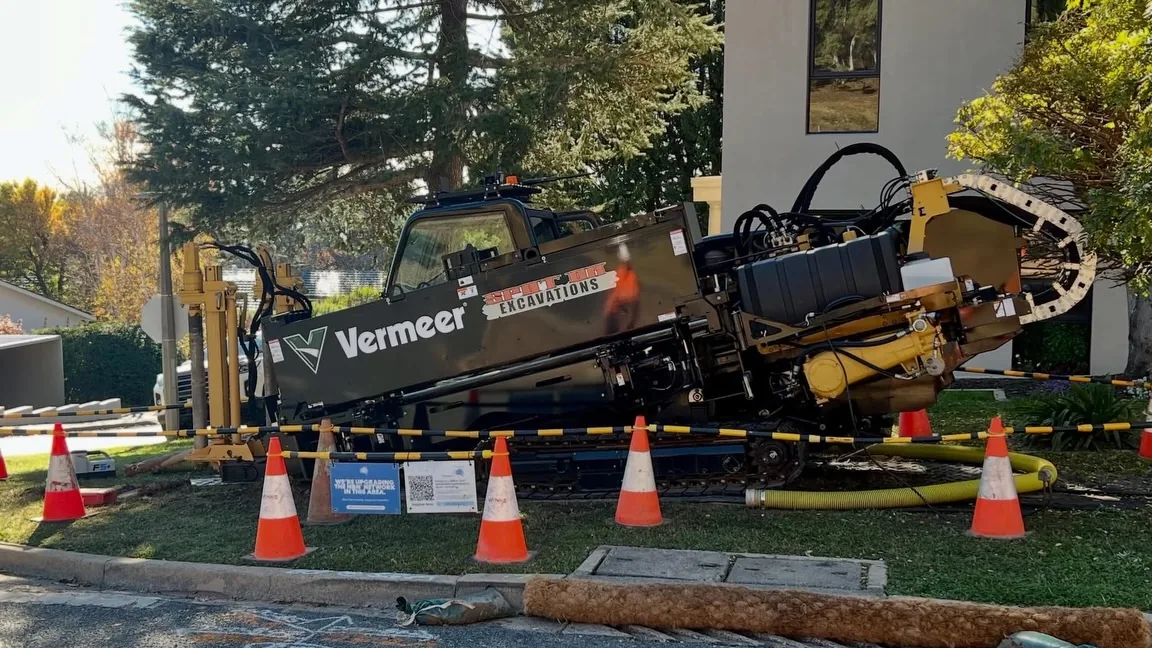
What does pipe and conduit installation cover?
This page is about the product that ends up in the ground: the pipe or conduit, the pits at each end and the proof that it is clear, continuous and where the drawings say it should be. The drilling and digging that put it there are covered separately under horizontal directional drilling, vacuum excavation and excavation and pits. Most clients call us for the whole job, from locating the services to pulling in the pipe.
We work with PE and HDPE in the sizes the job needs. Two recent examples show the range: a 355 mm SDR11 PN16 PE100 water main to Sydney Water specification at Badgerys Creek in 2026, supplied with manufacturer Certificates of Compliance, and 63 mm SDR13.6 PE100 conduit for telecommunications work in the ACT in 2026. Both are on our projects page.
Telecommunications and NBN conduit
Telecommunications is the clearest part of our recent work. Our project photos show conduit and pit work on the NBN rollout in the ACT, and a six-way 63 mm conduit bundle installed by the city crew around dense services in the Sydney CBD. Conduit goes in singly or as a multi-conduit bundle, with pits placed to suit the cable pulls that follow. See the Canberra and ACT page for the local detail.
Electrical conduit and water
Electrical conduit is installed to the asset owner's specification, and we work from the specification you give us. Energised cable work stays with the electrical contractor or network operator. For water, we install PE pipe to the utility's specification and keep the manufacturer's compliance paperwork with the job. Pipe is pulled back in a single length where the site allows, which keeps joints out of the bore.
Should pipe and conduit go in by HDD or open trench?
Under roads, driveways, creeks and established landscaping we drill, so the surface stays open. Along verges and in new estates where the route is clear, an open trench with a compact excavator can be quicker and cheaper. Our guide to HDD against open trenching sets out how we decide, and road and creek crossings covers the drilled crossings in detail.
How a job runs
- We lodge Before You Dig Australia (BYDA) enquiries, review the plans and confirm pipe type, size, depth and pit positions with you.
- Existing services are located and exposed by potholing at the pit positions and crossing points, so the bore path is set against what is really there.
- Entry and exit pits are dug by vac truck or compact excavator, then the pilot bore is drilled and tracked on a DigiTrak F5 steering system and reamed to suit the pipe.
- Pipe or conduit is pulled in. For open trench, it is laid, bedded and backfilled to the specification.
- Conduits are proved and roped so the next crew can pull cable straight away, and pits are finished and tidied.
- Handover records follow: manufacturer certificates and the as-built and photo details the asset owner requires.
Plant
Plant used on pipe and conduit jobs
- Vermeer D40x55DR S3Dual-rod drill, built for rock and the rig we choose where ground is hard.
- Vermeer D40x55 S3 and D23x30 S3Mid and smaller rigs for conduit, services and shorter crossings.
- DigiTrak F5 steering systemsTwo systems for tracking the pilot bore, run by the drill crew.
- Four vacuum excavation trucksPits and pothole exposure of existing services without cutting them.
- Compact excavatorsDeere E36ZS and two Yanmar ViO30 machines for pits, trenches and backfill.
- Case TR310B track loader, tippers and trailersMoving pipe, bedding and spoil around the site.
- BYDA enquiries before every job, and plant risk assessments and a safe work method statement on site.
- Digital pre-starts completed by QR code before plant is used.
- Pipe and conduit installed to the specification you provide, with manufacturer certificates kept for handover.
Questions
Pipe and conduit installation questions
What sizes of pipe and conduit have you installed?
Recent jobs include a 355 mm SDR11 PN16 PE100 water main and 63 mm SDR13.6 PE100 conduit. A 250 mm water main pull-back and a six-way 63 mm conduit bundle also appear in our posted work. Send the size and pressure class and we will tell you what suits the rig and the ground.
Do you install NBN and telecommunications conduit?
Yes. Our project photos show NBN conduit and pit work in the ACT and telco conduit in the Sydney CBD. We work for telcos and for the contractors who build for them.
Do you install electrical conduit?
We install conduit and pits to the asset owner's specification. Network operators set their own rules on who may do which work, so tell us yours when you ask for a quote and we will confirm in writing what we can take on.
Do you supply the pipe?
It depends on the job. Many clients supply to their own specification. If we source it, we keep the manufacturer's certificates with the job records.
Can you install by trench instead of drilling?
Yes. Open trench with our compact excavators suits clear routes. We will tell you honestly which method costs less for your site.
What do I get at handover?
The records the asset owner asks for, which commonly include manufacturer certificates, photos and as-built details. Tell us the requirement when you ask for a quote.
Related
Next step
Send us the pipe size and the route.
Tell us the pipe or conduit, the length and where it goes, and we will come back with a method and a quote.