
Vacuum excavation
Vacuum excavation and non-destructive digging, Sydney and NSW
Spot On Excavations runs four vacuum excavation trucks with operators from North Richmond, NSW, for non-destructive digging, potholing and service exposure across Sydney, the Hawkesbury, Canberra and the NSW South Coast. We expose buried services with water and suction instead of a bucket, so cables and pipes are proved, not hit.
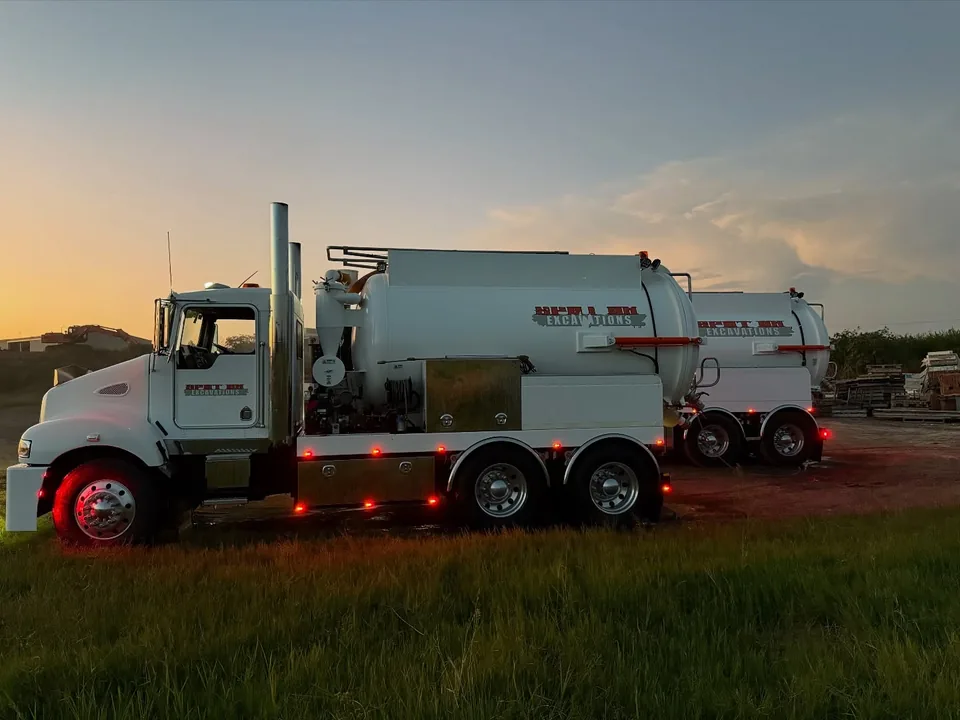
What is vacuum excavation, and why is it used near live services?
Vacuum excavation is a way of digging with water or air to loosen the ground and a vacuum to lift the spoil into a tank. It goes by several names: non-destructive digging (NDD), non-destructive excavation, hydro excavation, hydrovac, soft dig, and on site often just the vac truck or sucker truck. The point is the same in every case. A steel bucket can crack a pipe, nick a cable or pull a conduit out of line without anyone noticing until later. Water and suction move soil, not services.
That is why vacuum excavation is the accepted way to dig close to live electrical cables, gas mains, water mains, telecommunications conduit and fibre. It also leaves a clean, neat hole with spoil already in the tank, which matters in a road verge, a garden or a tight yard where nobody wants a pile of dirt. Where the aim is to confirm what is down there before a bore or a trench, the job is called potholing. Our guide to digging near underground services explains where it sits in the wider process.
The four vacuum excavation trucks
We run four trucks, and they are not interchangeable. Which one goes to your job depends on access, how much spoil you expect to move, and where it has to go.
- MAN TGS: our hydro vac, the usual choice for potholing and service exposure on roads and in built-up areas.
- Kenworth K200 (two trucks): vacuum tanker units, used where there is more material to move or pits and drains to clean.
- Kenworth T300: a vacuum excavation unit for excavation support and spoil removal.
We do not publish tank sizes or pump ratings on this page because they depend on the unit and the job. Tell us the site and the work and we will say which truck we would send.
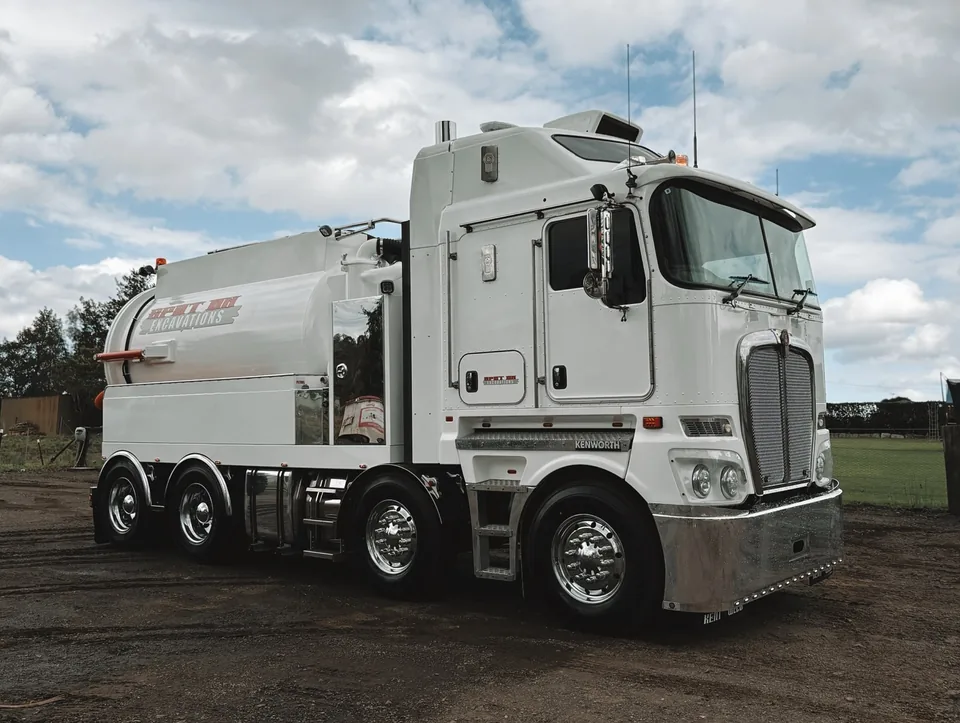
What we use it for
- Potholing to prove services before directional drilling. We expose the cables, pipes and conduits along or across a bore path so the drill crew knows depth and position before the rig starts. See horizontal directional drilling.
- Pits and trenches around existing assets, where a machine cannot safely dig close to a live service.
- Pole holes in ground that is crowded with services or hard to reach.
- Cleaning pits and drains, and clearing silt or slurry from excavations.
- Spoil removal from a drill pit, bore exit or trench, so the site stays clean and the material goes where it should.
- Tight access, such as laneways, gardens, car parks and the back of existing buildings where a full-size excavator will not fit.
Pits for conduit and pipe work are covered under excavation and pits and pipe and conduit installation.
What does a vacuum excavation truck cost to hire in Sydney?
The cost depends on the site more than the truck: hours or number of holes, depth, tipping, water, access and minimum hire all move it, so we quote each job and do not publish a rate. We supply the truck and the operator together. This is not dry hire, and we do not hand over a truck for someone else to run. The operator works to a safe work method statement (SWMS), completes pre-starts, and knows the equipment, the water and the spoil. If you need a vac truck hire in Sydney or regional NSW, you are hiring a crew and a method as well as a truck.
For the factors that move a quote, from number of holes to tipping and traffic control, read what drives vacuum excavation cost.
How a vacuum excavation job runs
- Enquiry and scope. You tell us the site, the work, and what is known about the services. We confirm what we need to quote.
- BYDA enquiry. We lodge a Before You Dig Australia enquiry and read the plans we get back. The plans are a starting point, not proof.
- Locate. We trace the marked services on site with our Radiodetection RD8200 locator.
- Pothole. We expose each service by vacuum excavation until we can see it.
- Record. We record the depth and offset of what we find, with a photo, so the information goes with the job.
- Backfill or leave open. The hole is backfilled and made safe, or left open and protected, exactly as the client instructs.
Who it is for, and where we work
Most of our vacuum excavation is for civil head contractors, electricians and telecommunications crews, councils and utilities, developers, and other drilling firms who want services proved before they work. We also work for property owners and farms. We are based in North Richmond and work across Sydney, the Hawkesbury, Western Sydney, Canberra and the ACT, the NSW South Coast and regional NSW. Local pages cover the detail for the Hawkesbury, Western Sydney, Canberra and the ACT and the South Coast and Illawarra.
Safety on a vacuum excavation job
We work to SWMS and complete digital pre-starts for plant. Where the situation calls for it, we use WatchGas SST4 Mini four-gas meters to monitor the atmosphere around a pit or drain. We also run a BYDA enquiry before every job, and our site documentation includes plant risk assessments and an Emergency Management Plan.
Questions
Vacuum excavation questions
What is the difference between hydro excavation, vacuum excavation and air excavation?
Hydro excavation uses pressurised water to break up the soil and a vacuum to remove it, and the terms hydrovac and vacuum excavation are often used for the same truck. Air excavation uses compressed air instead of water, which suits some sensitive or dry sites. Our trucks work with water and vacuum. If your site has restrictions on water or slurry, tell us when you ask for a quote.
How close can you dig to a live cable?
There is no single answer. The asset owner sets the rules for working near its cable or pipe, and those rules differ between electrical, gas, water and telecommunications. We follow the asset owner’s requirements, locate first and expose the service by vacuum excavation rather than a bucket. Ask the asset owner for its conditions, or send them to us with the enquiry.
Is there a minimum hire?
Yes, there is a minimum on most jobs, because a truck and operator have to travel to site and set up. It depends on the work and the location, and we give it to you in the quote before you commit. Several holes in one visit usually make better use of the time than one at a time.
What do you need from me to quote?
The site address, what you want exposed or removed, how many holes or how much material, the depth if you know it, and any BYDA plans or locate marks you already have. Photos of the access and where the spoil can go help. A site visit is sometimes the quickest way to be sure.
Do you work with HDD crews?
Yes. A lot of our potholing is done ahead of a bore, either for our own horizontal directional drilling crews or for other contractors who want services proved before they drill. We can hand over depth and offset records for each hole.
Do you work in Canberra?
Yes. We have worked on conduit installation in the ACT and travel for vacuum excavation there. See our Canberra and ACT page for how we mobilise.
Related
Next step
Need services exposed before you dig?
Tell us the site and what is underground. We will confirm the truck, the method and a quote.