
Service
Road, rail corridor and creek crossings without open trenching
Spot On Excavations bores water, electrical and communications services under roads, creeks, drains and driveways by horizontal directional drilling, from its base in North Richmond, NSW, across Sydney, the Hawkesbury and regional NSW. Crossings are located, potholed and drilled, with traffic support coordinated through Spot On Traffic.
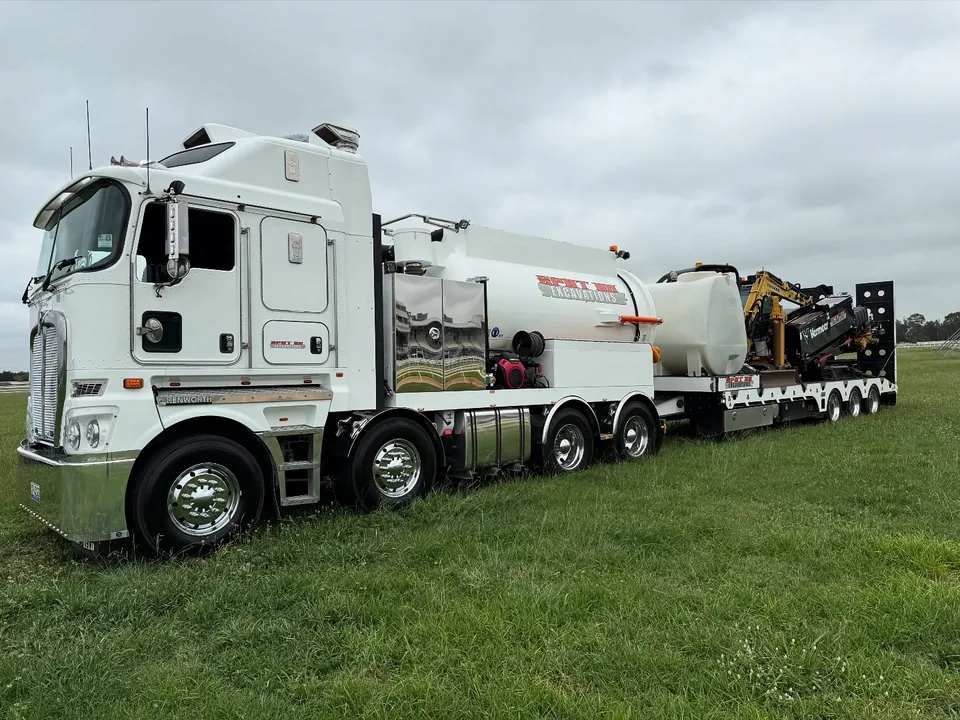
How do you cross a road or creek without open trenching?
You bore under it with horizontal directional drilling. A road crossing by open trench means a cut, traffic switches, reinstatement and often a closed lane. Under-road boring avoids most of that. We drill from a pit on one side to a pit on the other, then pull the pipe or conduit through the hole under the pavement. The same method takes a service beneath a creek, drain or culvert without disturbing the bed or banks.
These crossings are done with horizontal directional drilling, so the bore is steered and tracked rather than pushed blind.
Where it is used
- Under sealed and unsealed roads, for water, electrical and communications services.
- Near rail corridors, where the owner sets the conditions and any approvals are theirs to give.
- Beneath creeks and drainage lines, including crossings on rural and semi-rural properties.
- Under driveways, car parks and footpaths where cutting would mean reinstating hard surfaces.
Do road and creek crossings need permits?
Permits belong to the asset owner and the client. For a public road that usually means a road occupancy licence or council approval, and a rail corridor has its own owner conditions. We do not hold those approvals on your behalf, but we plan the pit locations and work hours with you so the application matches what will actually happen on site.
Where the job needs traffic control, we coordinate it through Spot On Traffic.
How a crossing runs
- Request Before You Dig Australia (BYDA) asset plans and confirm the road or creek owner.
- Locate and pothole the services that cross the line, using our vacuum excavation trucks.
- Set out the entry and exit pits clear of the carriageway where possible.
- Drill the pilot bore, track it from the surface, ream and pull the pipe or conduit through.
- Backfill the pits, reinstate and remove spoil and drilling fluid.
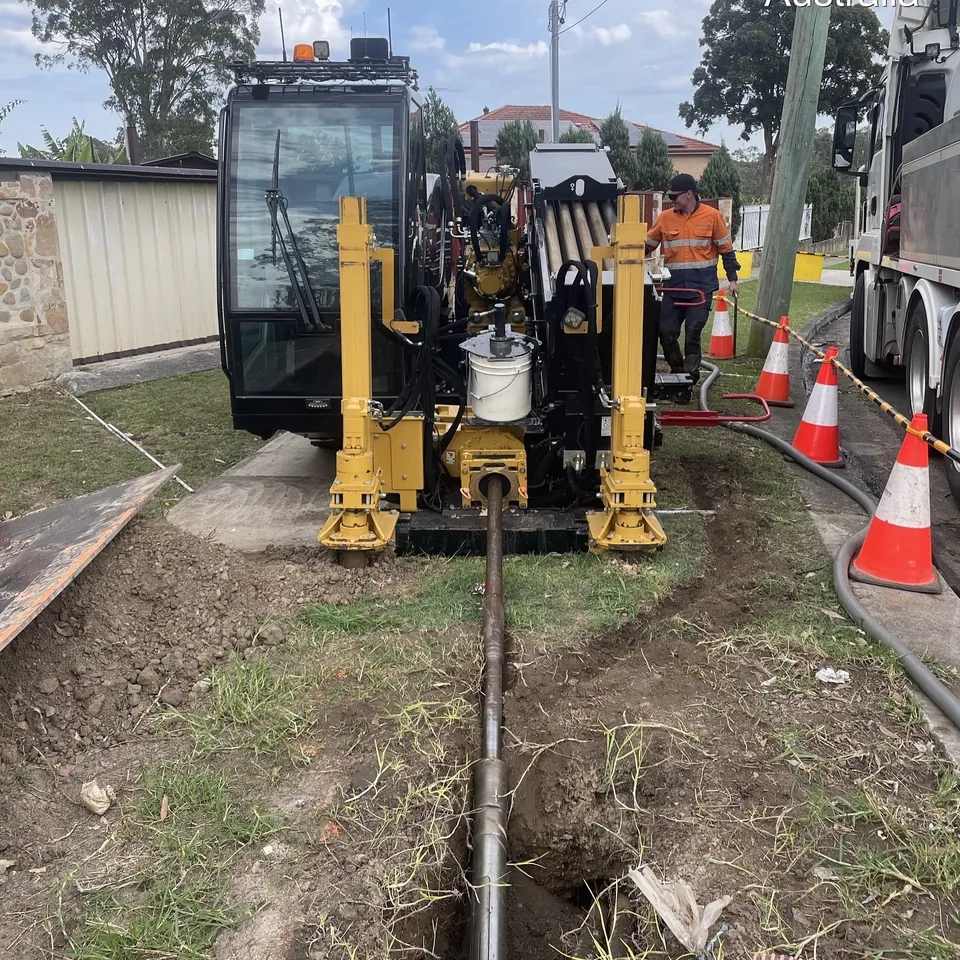
Equipment for crossings
- Vermeer D23x30 S3 and D40x55 S375 kW and 104 kW rigs for most road and driveway crossings.
- Vermeer D40x55DR S3104 kW dual-rod rig, built for rock under a road or creek bank.
- Vermeer D6x6Short crossings with limited room for the rig.
- DigiTrak F5Tracking and steering, so the bore stays on its planned line.
- Vacuum excavation trucksFour trucks to expose crossing services before the bore and open the pits.
We also work with PE pipe, electrical conduit and telecommunications conduit. Our pipe and conduit installation page describes the products. For areas we cover, see Western Sydney and Canberra and the ACT.
Questions
Crossing questions, answered
Can you bore under a road without closing it?
In many cases the bore runs beneath the pavement from pits set off the carriageway, so the road stays open. Pit locations, traffic arrangements and the road owner's conditions decide what is possible, so we plan each crossing with the client.
Who arranges road occupancy and council permits?
The asset owner and the client hold those approvals. We give you the pit locations, work hours and method so the application is accurate, and we coordinate traffic support through Spot On Traffic.
Do you work near rail corridors?
We carry out boring near rail corridors where the owner's conditions allow. We do not hold rail accreditation, and the owner's access and approval requirements apply.
Can you cross a creek or drain without disturbing it?
Yes. Drilling beneath a creek or drain avoids digging in the bed or banks. We locate services first and plan the entry and exit pits clear of the waterway.
What do you need to quote a crossing?
The location, the width to cross, the product and size, the road or waterway owner, known services and access. Our pricing guide includes a checklist.
Related
Next step
Got a crossing to price?
Send us the location, the owner and the product. We will tell you how we would bore it.